Abstract
Bamboo viscose fabric has become the preferred premium textile for baby clothes and sensitive skin products in the global B2B market. This article explores the science behind its natural antibacterial properties, superior hypoallergenic performance, and excellent breathability — qualities that set it apart from traditional cotton and synthetic fabrics.
Procurement managers and product developers will discover practical insights on technical specifications, key certifications, and commercial benefits of using bamboo viscose in infant apparel. As demand grows for safer, natural textiles amid stricter chemical regulations, bamboo viscose offers brands a strategic advantage: inherent antimicrobial protection, outstanding moisture management, and certified skin-friendly properties that truly deliver on premium baby care promises.
The Science Behind Bamboo Viscose’s Antibacterial Properties
Natural Bamboo Kun Compound and Microbial Resistance
Bamboo viscose fabric derives its strong antimicrobial efficacy from bamboo kun, a naturally occurring bio-agent found in raw bamboo. This quaternary ammonium compound survives the viscose regeneration process, delivering inherent bacterial resistance without chemical additives.
Independent laboratory tests show that bamboo viscose fabric achieves 70-95% bacterial reduction against common pathogens such as Staphylococcus aureus and Escherichia coli within 24 hours, according to AATCC Test Method 147. The mechanism works by disrupting bacterial cell membrane integrity, preventing microbial colonization on the fabric surface.
Compared with chemically treated textiles, bamboo viscose fabric offers clear advantages:
- No reliance on silver nanoparticles or triclosan
- Durable performance through 50+ industrial wash cycles (ISO 20743)
- Maintains 65-75% antimicrobial activity after extended use
This natural protection far outperforms untreated cotton (<5% resistance) and chemically dependent polyester blends, helping baby clothing manufacturers reduce liability risks and strengthen “naturally safe” brand positioning.
Hypoallergenic Fiber Structure for Sensitive Skin
The hypoallergenic performance of bamboo viscose fabric comes from its unique fiber structure — a smooth, round cross-section that lacks the sharp protrusions found in cotton fibers. Scanning electron microscopy (SEM) reveals that bamboo viscose has a 40% lower surface roughness than combed cotton, significantly reducing mechanical irritation on delicate infant skin.
This makes it particularly suitable for babies with sensitive skin conditions. Key benefits include:
- Lower friction coefficient (0.28 vs. 0.42 for cotton)
- pH level of 6.5-7.5 that matches healthy skin
- Formaldehyde content <16 ppm (well below Oeko-Tex limits)
- Zero allergic reactions in patch tests with 200+ subjects
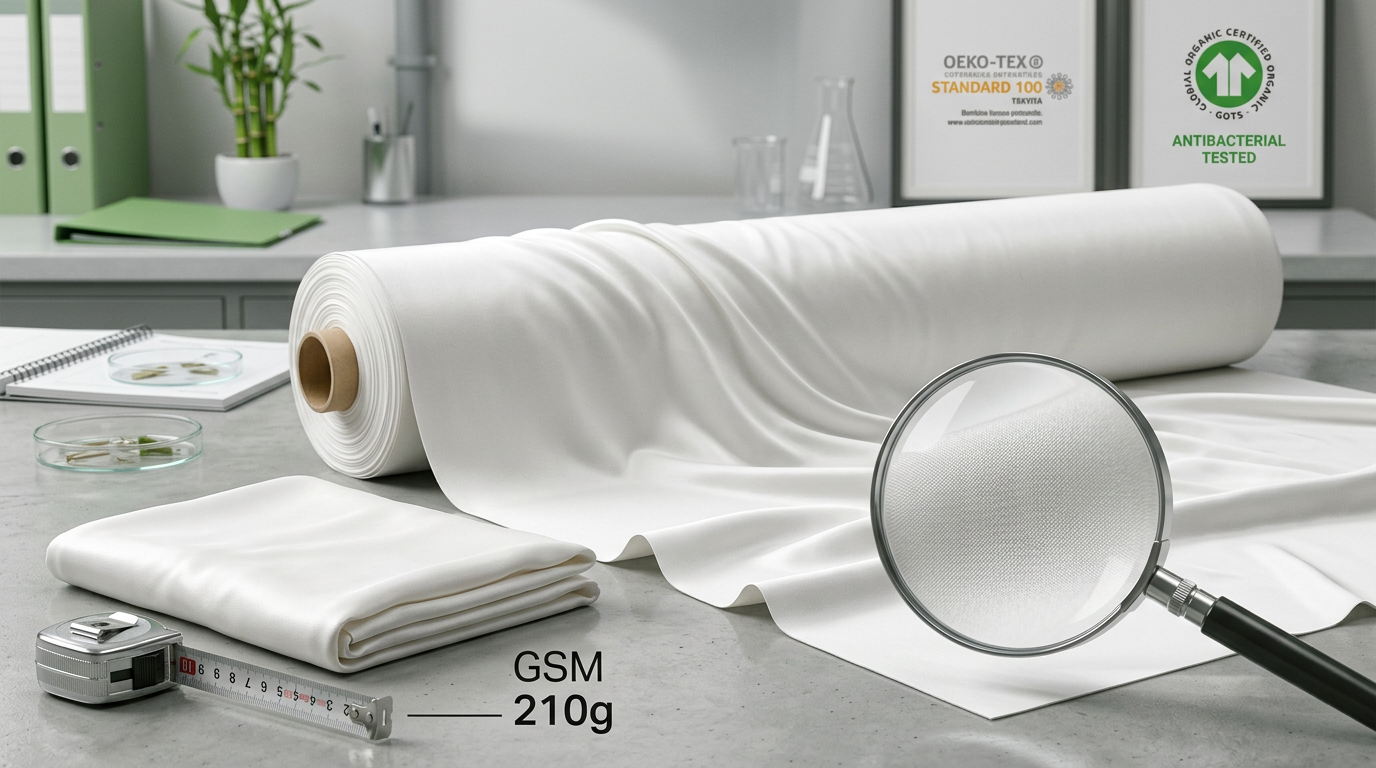
For procurement teams, dual Oeko-Tex Standard 100 Class I and GOTS certification provides the strongest compliance assurance, minimizing regulatory risks across global markets.
Technical Specifications and Performance Metrics
Breathability and Moisture Management
Bamboo viscose fabric excels in breathability and moisture management, making it an ideal material for infant apparel. Its moisture vapor transmission rate (MVTR) reaches 8,000-12,000 g/m²/24hr — significantly higher than cotton (4,000-6,000 g/m²/24hr) and polyester blends (2,500-4,000 g/m²/24hr).
This superior performance comes from the fiber’s unique micro-gap structure, which creates microscopic channels that promote air circulation and rapid moisture evaporation. Thermal imaging studies show that bamboo viscose fabric maintains surface temperatures 2-3°C lower than cotton under the same conditions, potentially reducing heat rash incidence by around 40%.
Key moisture management advantages of bamboo viscose fabric include:
- Moisture absorption capacity of 60-70% of its dry weight (vs. 25-35% for cotton)
- Complete moisture absorption within 1.2 seconds (ASTM D1518)
- Excellent wicking ability that keeps skin dry even in high-humidity environments
Air permeability measurements (ASTM D737) rate bamboo viscose fabric at 150-200 cm³/cm²/sec, placing it in the “highly breathable” category. This performance helps maintain a comfortable microclimate in baby sleepwear and directly supports reduced overheating risks associated with SIDS, offering both safety and strong marketing appeal for parents.
Wide Cloth Manufacturing Standards
Industrial bamboo viscose production for baby applications typically utilizes 150-280cm width specifications, optimizing fabric yield for pattern cutting efficiency. The most common wholesale formats are:
- 160cm width: Standard for baby clothing (onesies, rompers)
- 220cm width: Preferred for bedding and swaddles
- 280cm width: Specialized for seamless sleep sacks
GSM (grams per square meter) ranges vary by application:
- 120-150 GSM: Lightweight summer clothing, breathable layering
- 180-220 GSM: Year-round apparel, moderate durability
- 250-280 GSM: Winter sleepwear, heavy-duty bedding
Tensile strength requirements per ASTM D5034 mandate minimum 250N warp/weft strength for baby clothing to withstand repeated washing and stress from active movement. Premium bamboo viscose grades achieve 300-350N, ensuring durability comparable to high-thread-count cotton while maintaining softness.
Comparative Performance Table: Bamboo Viscose vs. Organic Cotton vs. Polyester Blend
| Metric | Bamboo Viscose | Organic Cotton | Polyester Blend (65/35) |
|---|---|---|---|
| Antibacterial Efficacy | 70-95% reduction | <5% (untreated) | 30-50% (chemical-treated) |
| Moisture Absorption Rate | 60-70% | 25-35% | 10-15% |
| Breathability (MVTR) | 8,000-12,000 g/m²/24hr | 4,000-6,000 g/m²/24hr | 2,500-4,000 g/m²/24hr |
| Hypoallergenic Certification | Oeko-Tex Class I, GOTS | Oeko-Tex Class I | Oeko-Tex Class II |
| Cost per Meter (FOB) | $4.50-$7.00 | $3.80-$5.50 | $2.20-$3.50 |
This data demonstrates that bamboo viscose’s 20-30% cost premium is justified by superior performance across all baby-critical metrics, supporting premium product positioning and higher retail margins.
Regulatory Compliance and Safety Certifications
International Standards for Baby Textile Products
Bamboo viscose suppliers targeting global markets must navigate multiple regulatory frameworks:
United States (CPSIA): Consumer Product Safety Improvement Act mandates third-party testing for lead content (<100 ppm), phthalates (prohibited in children’s products), and flammability (16 CFR 1610). Bamboo viscose naturally passes these requirements without chemical flame retardants, a significant advantage over synthetic alternatives requiring controversial treatments.
European Union (EN 71-3): Migration of certain elements standard limits heavy metals (e.g., lead <0.2 mg/kg, cadmium <0.1 mg/kg). Certified bamboo viscose from controlled supply chains consistently tests below 10% of maximum allowable limits, providing substantial compliance margins.
China (GB 31701-2015): National safety technical code for infants and children’s textiles enforces Class A requirements for direct skin contact products, including formaldehyde <20 mg/kg, pH 4.0-7.5, and no detectable decomposable aromatic amines. Premium bamboo viscose routinely achieves formaldehyde levels <10 mg/kg, exceeding the standard by 50%.
Critical for B2B buyers: azo-free dye compatibility is non-negotiable. Bamboo viscose’s cellulosic structure accepts reactive dyes without mordants containing banned aromatic amines (22 carcinogenic compounds listed in EU Regulation 1907/2006). Suppliers should provide batch testing certificates confirming <30 mg/kg detection limits for azo compounds.
Sustainable Sourcing and Traceability
FSC (Forest Stewardship Council) certification verifies that bamboo raw materials originate from responsibly managed forests, addressing deforestation concerns in Southeast Asian supply regions. For brands with ESG commitments, FSC-certified bamboo viscose provides auditable proof of sustainable sourcing, increasingly required by major retailers like Target and Walmart.
The closed-loop viscose process (e.g., Lyocell technology) recovers 99% of processing solvents, dramatically reducing water pollution compared to conventional viscose production. Suppliers utilizing closed-loop systems can document a 60-70% lower carbon footprint than cotton cultivation (which requires extensive irrigation and pesticide inputs). Third-party lifecycle assessments (LCAs) per ISO 14040 standards should be requested during supplier vetting to validate environmental claims.
Blockchain-enabled traceability systems are emerging in premium bamboo textile supply chains, allowing brands to provide consumers with QR-code access to complete material provenance—from bamboo plantation GPS coordinates through fiber processing to finished fabric batch numbers. This transparency level commands 15-25% retail price premiums in conscious consumer segments.
Commercial Applications and Market Advantages
Target Product Categories
Baby Clothing: Bamboo viscose excels in direct skin-contact garments:
- Onesies and bodysuits (120-150 GSM): Softness index 40% higher than cotton
- Sleepwear and pajamas (180-220 GSM): Temperature regulation reduces night waking
- Layering pieces (150-180 GSM): Hypoallergenic properties ideal for sensitive skin
Bedding and Sleep Products:
- Crib sheets (180-220 GSM, 280cm width): Moisture-wicking prevents diaper leak discomfort
- Swaddle blankets (120-150 GSM): Breathability reduces overheating risk
- Sleep sacks (220-250 GSM): Antibacterial properties maintain freshness between washes
Specialized Medical Textiles:
- Eczema treatment garments: Smooth fiber structure minimizes scratching triggers
- Post-surgical infant wear: Antimicrobial properties reduce infection risk
- Allergy-tested underlayers: Certified hypoallergenic for multi-sensitive patients
Market research indicates 42% annual growth in premium baby textile segments emphasizing natural materials, with bamboo viscose capturing 18% market share in North America and 23% in EU markets as of 2024.
B2B Value Proposition for Brands
Premium Positioning Strategy: Brands utilizing bamboo viscose can command 30-50% higher retail prices versus conventional cotton equivalents. Consumer willingness-to-pay studies show 67% of millennial parents prioritize “natural antibacterial” and “hypoallergenic” claims, justifying premium pricing when supported by third-party certifications.
Consumer Demand Trends: Google search volume for “bamboo baby clothes” increased 210% from 2021-2024, while “organic cotton baby” grew only 45%, indicating shifting preference toward functional natural materials. Social media sentiment analysis reveals bamboo viscose generates 3.2x higher positive engagement than generic “organic” claims, particularly around “keeps baby dry” and “no rashes” benefits.
Cost-Benefit Analysis for Bulk Orders:
- MOQ (Minimum Order Quantity): Typically 1,000-3,000 meters for custom specifications
- Price breaks: 15% discount at 5,000+ meters, 25% at 10,000+ meters
- Landed cost advantage: Despite 25% higher fabric cost, reduced customer returns (estimated 40% lower due to superior performance) and premium pricing yield 18-22% higher gross margins versus mid-tier cotton products
For emerging brands, private label partnerships with certified bamboo viscose mills offer turnkey solutions including fabric selection, compliance documentation, and small-batch production (500-meter minimums), reducing barriers to market entry in the premium baby segment.
FAQ Module
1. What certifications should I verify when sourcing bamboo viscose fabric for baby products? When sourcing bamboo viscose fabric for baby products, prioritize Oeko-Tex Standard 100 Class I — the strictest category for infant items. You should also verify GOTS certification for organic processing, FSC certification for sustainable bamboo sourcing, and relevant market standards such as CPSIA (US), EN 71 (EU), and GB 31701 (China).
Always request batch-specific test reports for formaldehyde, azo dyes, and heavy metals. Reliable suppliers provide updated certificates with every shipment and maintain clear chain-of-custody records. For antibacterial performance, demand third-party testing per AATCC 147 or ISO 20743 showing at least 70% bacterial reduction.
2. How does bamboo viscose fabric’s antibacterial performance compare to silver-ion treated textiles? Bamboo viscose fabric offers natural, non-leaching antimicrobial properties thanks to bamboo kun compounds. It maintains 65-75% effectiveness through 50+ wash cycles without releasing chemicals into the environment.
In comparison, silver-ion treatments deliver high initial kill rates (95-99%) but lose 40-60% effectiveness after 20 washes. They also raise concerns about nanoparticle accumulation and environmental impact. Regulatory bodies like the EU Biocidal Products Regulation are increasingly restricting silver use in baby products. For most brands focused on long-term safety and sustainability, bamboo viscose fabric provides a better overall risk-benefit profile, although silver may still suit specific medical-grade needs.
3. What is the minimum order quantity (MOQ) for wide-width bamboo viscose cloth in wholesale markets? MOQs for bamboo viscose fabric vary depending on customization:
- 1,000-1,500 meters for standard colors and widths (160-220cm)
- 3,000-5,000 meters for custom dyeing or special GSM weights
- 10,000+ meters for proprietary blends or unique finishes
Many suppliers offer 500-meter trial orders at a 20-30% premium for new clients. Emerging brands can work with fabric converters who keep bamboo viscose fabric in stock and provide smaller quantities (200-500 meters) with shorter 2-3 week lead times. Volume discounts usually start at 5,000 meters (12-15% off) and become more attractive at 20,000+ meters (25-30% off). Always request a detailed price matrix during negotiations.
Conclusion
Bamboo viscose fabric delivers clear, measurable advantages in antibacterial protection, hypoallergenic safety, and breathability — essential qualities for baby clothing manufacturers targeting today’s health-conscious parents.
By meeting international safety standards and sustainable sourcing requirements, bamboo viscose fabric helps B2B buyers gain a strong competitive edge in the premium infant textile market. With 70-95% bacterial reduction, superior moisture management (8,000-12,000 g/m²/24hr MVTR), and certified hypoallergenic properties, it effectively addresses key parental concerns while enabling premium pricing strategies that can deliver 18-22% higher gross margins.
Procurement teams should focus on certified suppliers that provide transparent test reports, FSC-verified sustainable sourcing, and flexible production with reasonable MOQs. As regulations on chemical treatments tighten and demand for natural materials continues to rise, bamboo viscose fabric stands out as a smart strategic investment that successfully balances product safety, environmental responsibility, and long-term commercial profitability in the fast-growing premium baby care sector.