Introducción
For textile buyers, product developers, and sourcing professionals, choosing between TENCEL Lyocell fabric and cotton is an important decision that can directly affect product performance, positioning, and customer experience. While cotton remains one of the most widely used fibers due to its availability and versatility, TENCEL Lyocell fabric has gained increasing attention for its softness, moisture management, and sustainable production advantages.
Rather than replacing cotton entirely, TENCEL Lyocell offers an alternative solution for applications where comfort, performance, and environmental responsibility are key considerations, including premium bedding, loungewear, and modern apparel.
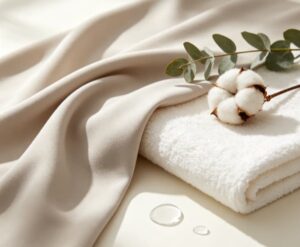
The Fiber Fundamentals: Understanding TENCEL Lyocell Fabric and Cotton
Before comparing their performance, it is important to understand the fundamental differences between TENCEL Lyocell fabric and cotton.
Cotton is a natural cellulose fiber harvested from the cotton plant and has been widely used in textile production for centuries. Its availability, versatility, and familiar hand feel have made it a preferred choice for apparel and home textile applications.
TENCEL Lyocell fabric is a regenerated cellulose fiber made from wood pulp sourced from responsibly managed forests, including eucalyptus and other tree species. Produced by Lenzing, TENCEL Lyocell uses a closed-loop manufacturing process that recovers more than 99.8% of the solvent used during production, helping minimize waste and resource consumption.
Raw Material and Production Differences
The biggest difference between these two fibers lies in their sourcing and manufacturing processes. Cotton production relies on agricultural land, water resources, and farming inputs, while TENCEL Lyocell is produced from renewable wood sources with certified forestry practices.
TENCEL Lyocell fibers are sourced from FSC-certified or PEFC-certified forests, providing greater traceability throughout the supply chain. According to the Higg Materials Sustainability Index, TENCEL Lyocell and Modal fibers demonstrate lower environmental impacts compared with conventional cellulosic fibers in key areas such as carbon emissions and water consumption.
Understanding these differences helps textile buyers evaluate which material better aligns with their product goals, sustainability targets, and end-use requirements.
Moisture Management: Where TENCEL Lyocell Fabric Truly Shines
If there is one area where TENCEL Lyocell fabric consistently outperforms cotton, it is moisture management.
Cotton is reasonably absorbent, with a moisture regain of around 8–10%. It pulls moisture away from the skin and holds it within the fiber structure. The problem? Cotton holds onto that moisture. Once cotton gets wet, it takes a long time to dry, and the fabric feels heavy and damp against the skin.
TENCEL Lyocell fabric has a moisture regain of approximately 11–11.5%. But the real difference is not just in how much moisture it absorbs—it is in how it handles that moisture. The fiber’s internal structure features nano-scale channels that allow it to absorb moisture efficiently and release it just as quickly. According to research, TENCEL Lyocell shows significantly higher moisture absorption than cotton at higher humidity levels—above 60% relative humidity, the fiber increases its absorption by 21%, which is almost twice the absorbency increase of cotton.
| Propiedad | TENCEL Lyocell Fabric | Algodón |
|---|---|---|
| Moisture Regain | ~11–11.5% | ~8–10% |
| Moisture Absorption at High Humidity | +21% increase (above 60% RH) | ~half the increase of Lyocell |
| Moisture Management vs. Cotton | 40% higher | Baseline |
| Velocidad de secado | Fast—releases moisture quickly | Slow—holds moisture |
| Resistencia a la humedad | Maintains tenacity well when wet | Weaker when wet |
The practical implications for end products are significant:
-
Ropa de cama: TENCEL Lyocell fabric wicks moisture away from the body, helping hot sleepers stay cool and dry throughout the night. Cotton sheets can trap heat and moisture, leading to discomfort.
-
Activewear: The rapid moisture-wicking properties of TENCEL Lyocell fabric make it ideal for performance apparel. It keeps the wearer dry during physical activity, whereas cotton becomes heavy and clingy once sweat sets in.
-
Pijamas: For relaxed, all-day wear, the breathability and moisture regulation of TENCEL Lyocell fabric provide consistent comfort across changing temperatures.
Softness and Hand Feel: A Tale of Two Textures
Both TENCEL Lyocell fabric and cotton are known for their softness, but they achieve it in different ways.
Cotton softness depends heavily on fiber length, staple quality, and finishing processes. The surface of cotton fibers has a natural roughness that can feel slightly textured against the skin.
TENCEL Lyocell fabric is smooth at a microscopic level. The fiber surface is round and uniform, with no sharp edges or rough spots. This translates to a silk-like, almost fluid softness that many describe as “silky-soft from the first day of use”. The fabric drapes effortlessly and feels luxurious against the skin.
Textile buyers should consider the end-use application:
-
For premium bedding and loungewear, the silky smoothness of TENCEL Lyocell fabric creates a premium sensory experience that cotton—even high-quality cotton—struggles to match.
-
For everyday basics like t-shirts and casual wear, cotton’s familiar, cozy feel remains a strong selling point.
-
For garments that require fluid drape—dresses, blouses, and flowing silhouettes—the drape quality of TENCEL Lyocell fabric is unmatched.
Durability and Longevity: Which Fabric Lasts Longer?
Durability is a critical consideration for textile buyers, particularly for products that will see frequent use and washing.
Resistencia a la humedad
Here is a surprising fact: TENCEL Lyocell fibers are generally stronger than cotton when wet. Cotton fibers lose significant strength when wet—anyone who has ever stretched a wet cotton t-shirt knows this firsthand. TENCEL Lyocell maintains its tenacity well under wet conditions, which means garments and home textiles made from TENCEL Lyocell fabric hold up better through repeated washing and drying cycles.
Pilling and Abrasion Resistance
Cotton is prone to pilling, especially with lower-quality staples or when subjected to friction. TENCEL Lyocell fabric has a lower risk of pilling, particularly when produced with care. The smooth fiber surface reduces abrasion and helps the fabric maintain its appearance over time.
Wrinkle Resistance
Cotton wrinkles. Anyone who has ever owned a cotton shirt knows the struggle of ironing. TENCEL Lyocell fabric resists wrinkles naturally. This is not just a convenience factor—it reduces the need for ironing, which saves energy and extends the life of the garment.
Breathability and Thermal Regulation
Breathability is often cited as a key advantage of cotton, and rightfully so. Cotton is naturally breathable and comfortable across a wide range of temperatures.
TENCEL Lyocell fabric is equally breathable, with one key advantage: its superior moisture management means it keeps the wearer dry as well as cool. The fiber structure allows for efficient airflow while simultaneously managing moisture. This makes TENCEL Lyocell fabric particularly well-suited for:
-
Hot sleepers: The combination of breathability and moisture-wicking keeps the body at a comfortable temperature throughout the night.
-
Activewear: Performance apparel needs to manage both heat and sweat. TENCEL Lyocell fabric does both effectively.
-
Transitional season clothing: For pieces worn across changing temperatures, the thermal regulation properties of TENCEL Lyocell fabric provide consistent comfort.
The Sustainability Story: TENCEL Lyocell Fabric vs Cotton
Sustainability is no longer a nice-to-have—it is a business imperative. Textile buyers are increasingly expected to source materials that minimize environmental impact.
Water Consumption
This is where the numbers get stark. According to the Pratt Sustainability Center, TENCEL consumes 10 to 20 times less water in manufacturing compared to cotton. Some sources cite even more dramatic figures—TENCEL Lyocell reportedly uses up to 11 times less water than cotton production. Given that cotton is one of the most water-intensive crops on the planet, this difference is substantial.
Carbon Emissions
TENCEL Lyocell and Modal fibers are produced with at least 50% less carbon emissions compared to generic lyocell and modal fibers. The results are calculated according to LCA standards (ISO 14040/44). While cotton’s carbon footprint varies significantly depending on farming practices, the closed-loop production of TENCEL Lyocell fabric offers a clear advantage in terms of manufacturing emissions.
Land Use
Cotton requires arable land—land that could otherwise be used for food production. TENCEL Lyocell fabric comes from trees grown on land that is often unsuitable for agriculture. This is not a minor distinction; it is a fundamental difference in how the two fibers interact with global food systems.
Biodegradabilidad
Both TENCEL Lyocell fabric and cotton are biodegradable and compostable at the end of their lifecycle. This is a significant advantage over synthetic fibers like polyester, which persist in landfills for centuries. However, the production process for TENCEL Lyocell fabric leaves no toxic substances in the fiber after production, which means the fabric can break down cleanly without releasing harmful residues.
OEKO-TEX Certification
TENCEL Lyocell fibers are certified under OEKO-TEX Standard 100, which tests for more than 1,000 harmful substances. This certification assures that the fibers are safe for human health and free from toxic residues.
| Sustainability Metric | TENCEL Lyocell Fabric | Algodón |
|---|---|---|
| Water Consumption in Manufacturing | 10–20× less than cotton | Baseline (high) |
| Carbon Emissions (vs. generic lyocell) | 50% less | Varies by farming practice |
| Land Use | Wood from non-agricultural land | Arable land (competes with food) |
| Biodegradabilidad | Yes—compostable in soil/freshwater | Sí |
| Norma OEKO-TEX 100 | Certified | Available but not inherent |
| Production Process | Closed-loop, 99.8% solvent recovery | Open-loop, resource-intensive |
Applications: Where Each Fabric Excels
Understanding the technical differences is valuable, but the real question for textile buyers is: which fabric is right for which application?
TENCEL Lyocell Fabric Is Ideal For:
-
Ropa de cama Premium: The silky smoothness, moisture-wicking, and breathability make TENCEL Lyocell fabric a standout choice for high-end sheets, duvet covers, and pillowcases.
-
Loungewear and Sleepwear: The soft hand feels and temperature regulation provide all-night comfort. The reduced odor development—TENCEL Lyocell fibers absorb sweat efficiently, creating a less favorable environment for odor-causing bacteria—is an added benefit.
-
Dresses and Flowing Garments: The fluid drape and wrinkle resistance make TENCEL Lyocell fabric perfect for garments that need to move gracefully.
-
Activewear and Performance Apparel: The 40% higher moisture management compared to cotton makes TENCEL Lyocell fabric a strong choice for sports and fitness apparel.
-
Home Textiles: Curtains, drapes, and upholstery benefit from the rich color uptake and long-lasting appearance of TENCEL Lyocell fabric.
Cotton Remains the Right Choice For:
-
Everyday Basics: T-shirts, underwear, and casual wear where cost is a primary consideration.
-
Denim and Heavyweight Fabrics: Cotton’s strength and structure make it ideal for denim, canvas, and other heavy-duty applications.
-
Budget-Conscious Collections: Cotton is more widely available at lower price points.
-
Products Requiring Specific Cotton Qualities: Long-staple cotton offers unique properties that cannot be replicated by other fibers.
The Cost Equation: TENCEL Lyocell Fabric vs Cotton Pricing
Let us address the elephant in the room: cost. TENCEL Lyocell fabric typically costs 40–80% more than cotton fabric. At first glance, this seems like a straightforward disadvantage for TENCEL Lyocell. But the full picture is more nuanced.
Although TENCEL Lyocell typically has a higher material cost than cotton, its premium positioning can create additional product value.
The Total Cost of Ownership
From the consumer’s perspective, the total cost of ownership may actually favor TENCEL Lyocell fabric:
-
Longer lifespan: The fabric maintains its appearance and softness through repeated washes.
-
Less maintenance: Wrinkle resistance means less ironing, which saves time and energy.
-
Better performance: Superior moisture management and breathability translate to higher satisfaction and fewer returns.
For textile buyers, the decision is not just about cost per yard—it is about the value proposition for the end consumer. TENCEL Lyocell fabric enables premium positioning, stronger margins, and a sustainability story that resonates with today’s conscious consumers.
Wholesale Pricing Context
Wholesale prices for TENCEL Lyocell fabric vary by specification, but industry sources suggest bulk pricing in the range of $6–9 per yard for quality TENCEL Lyocell, compared to $4–7 per yard for organic cotton. The gap is significant but narrowing as TENCEL Lyocell production scales and cotton prices fluctuate.
What Textile Buyers Should Look For When Sourcing TENCEL Lyocell Fabric
If you are considering TENCEL Lyocell fabric for your next collection or product line, here are the key factors to evaluate:
1. Verify the Certification
Not all lyocell is TENCEL Lyocell. TENCEL is a branded fiber from Lenzing, and it comes with specific quality and sustainability guarantees. Look for the TENCEL™ brand name and certification. Lenzing’s tracing technology can verify TENCEL fibers along the supply chain.
2. Check the Specifications
Our OEKO-TEX Certified TENCEL Lyocell fabric is available in the following specifications:
-
Anchura: 220cm
-
Composición: 100% TENCEL Lyocell
-
Weight: 140 GSM
-
Certification: OEKO-TEX Standard 100
These specifications make it suitable for a wide range of applications, from premium bedding to comfortable loungewear. The 140 GSM weight offers a balanced hand feel—substantial enough for durability while remaining lightweight and fluid.
3. Evaluate the Dyeing and Finishing
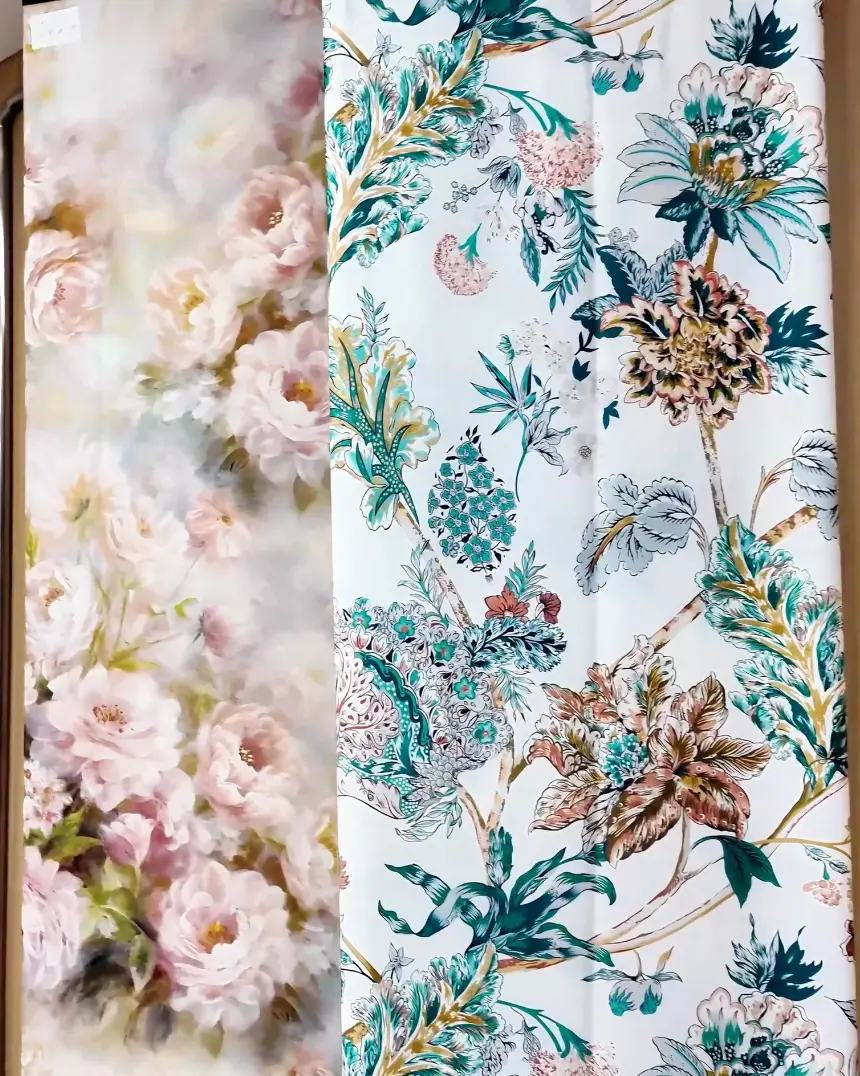
TENCEL Lyocell fabric accepts dye brilliantly, yielding rich, colorfast hues. However, the quality of dyeing and finishing can vary significantly between suppliers. Look for suppliers who use low-tension dyeing technology to preserve the fiber’s natural integrity and strength. This ensures that the fabric maintains its softness, drape, and durability through the finishing process.
4. Consider Digital Printing Capabilities
TENCEL Lyocell fabric is well-suited for digital printing, delivering sharp, vibrant results. If your application requires custom prints or patterns, verify that your supplier has the capability to execute digital printing to a high standard.
5. Assess the Supplier’s Expertise
TENCEL Lyocell fabric requires careful handling during processing. Look for suppliers with proven experience in working with TENCEL Lyocell, particularly in weaving, dyeing, and finishing. Suppliers who understand the unique characteristics of the fiber will deliver better results in bulk production.
Making the Decision: A Framework for Textile Buyers
The choice between TENCEL Lyocell fabric and cotton ultimately depends on your specific application, target market, and brand positioning. Here is a decision framework:
Choose TENCEL Lyocell fabric if:
-
Your product requires superior moisture management and breathability
-
You are targeting a premium or sustainability-focused market
-
Softness, drape, and silk-like hand feel are critical to the product experience
-
You want to differentiate your brand with a strong sustainability story
-
Your application is bedding, loungewear, activewear, or flowing garments
Choose cotton if:
-
Cost is the primary driver
-
Your application is denim, heavy-duty fabrics, or products requiring cotton’s specific structure
-
Your target market is price-sensitive and familiar with cotton
-
You are producing everyday basics at scale
The Verdict: Choosing the Right Fabric for Different Applications
TENCEL Lyocell fabric is not intended to replace cotton in every application. Cotton continues to be a practical choice for many textile products due to its availability and cost advantages. However, for brands and manufacturers looking to develop premium apparel and home textiles, TENCEL Lyocell offers a strong combination of softness, moisture management, drape, and responsible production.
Its smooth hand feel, stable performance, and sustainable credentials make it particularly suitable for products where comfort and material quality are key factors. From bedding and loungewear to fashion apparel, TENCEL Lyocell fabric provides textile buyers with more flexibility when creating differentiated product lines.
For suppliers and brands exploring TENCEL Lyocell fabric for upcoming collections, our OEKO-TEX Certified TENCEL Lyocell fabric is available in 100% TENCEL Lyocell composition, 220cm width, and 140 GSM weight. With low-tension dyeing technology and digital printing compatibility, it can be customized to meet different design and production requirements.
Contact our team to discuss fabric specifications, sample requests, and bulk supply options for your next textile project.